
A Refined Owner’s Guide to Precision Care
A Rolex watch is more than a timekeeper—it’s a meticulously engineered instrument designed to accompany you for a lifetime. To preserve both its technical excellence and elegant performance, proper winding and setting are essential skills for any Rolex owner. Below is a clear, expert-oriented guide based on official manufacturer recommendations.
Initiating Your Rolex’s First Journey. Before wearing your Rolex for the first time—or after it has stopped from inactivity—it’s important to give it a foundational manual wind. According to Rolex’s official care guidance, this ensures the movement functions precisely when you first wear it.
To begin:
Unscrew the winding crown gently by turning it counterclockwise until it releases from the case.
With the crown in the winding position, turn it clockwise approximately 25 full rotations. This supplies the mainspring with sufficient tension to start the movement. Turning the crown in the opposite direction will have no effect.
Secure the crown by screwing it back down firmly against the case to preserve the watch’s waterproof integrity.
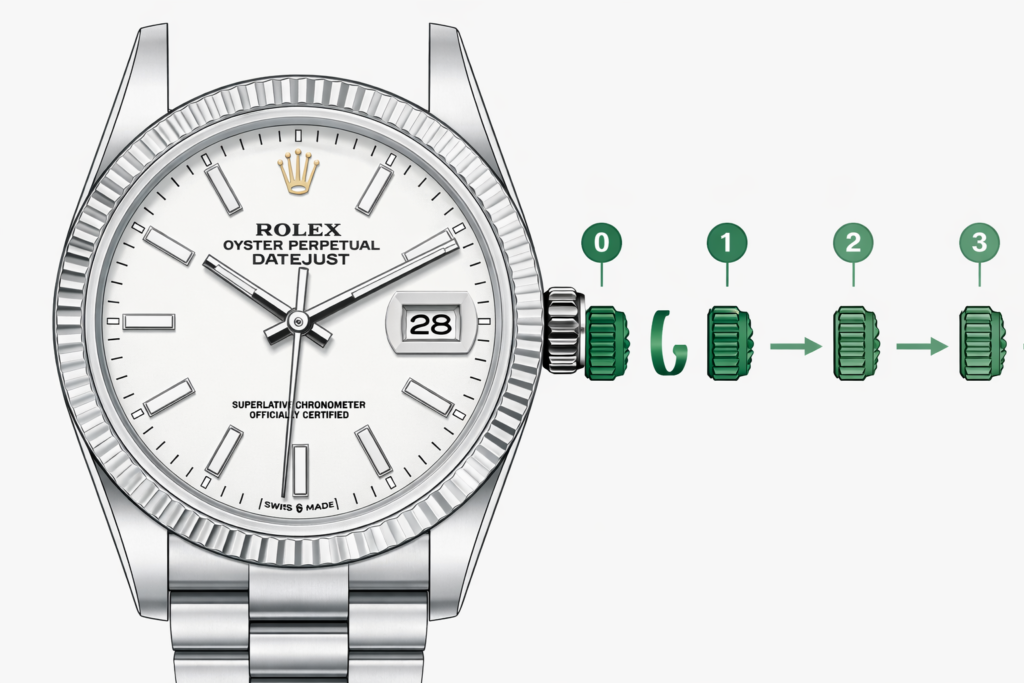
Once correctly wound and worn, a Rolex will continue to self-wind through the natural motion of the wearer’s wrist.
Knowing the correct winding routine helps avoid insufficient power while also preventing unnecessary strain on the movement, ensuring long-term reliability and accuracy.
Winding Frequency Guidelines
The ideal winding schedule depends on the movement type and how often the watch is worn:
- Automatic Rolex watches that are worn regularly do not usually need manual winding, as wrist motion keeps them powered. If the watch is worn only occasionally, winding it about once a week helps maintain accuracy and prevents it from stopping completely.
- Manual-wind Rolex watches should be wound daily to ensure consistent timekeeping. Many enthusiasts prefer winding their watches each morning as part of their routine.
How Many Turns Are Needed?
Rather than counting exact crown rotations, the best indicator is the feel of the crown itself. Wind the watch until you notice smooth, steady resistance. At that point, stop. This method ensures sufficient power reserve without placing unnecessary stress on the movement.
| Watch Type | Recommended Winds | Frequency | Power Reserve |
| Modern Automatic | 30-40 rotations | Weekly (if unworn) | 48-72 hours |
| Vintage Automatic | 25-35 rotations | 2-3 times per week | 36-48 hours |
| Manual Wind | 20-30 rotations | Daily | 36-42 hours |
| Recently Serviced | 35-40 rotations | As needed | Varies by model |
Considerations for Vintage Rolex Watches
Winding a vintage Rolex requires additional care, as older watches often contain delicate, age-sensitive components and different crown constructions compared to modern models. Early Submariners, Explorers from the 1950s and 1960s, and hand-wound Daytona references should always be handled gently. Because older mainspring materials lose efficiency over time, these watches may also need to be wound more frequently.
Notable manual-wind vintage Rolex models include the original Explorer ref. 6610, early non-automatic Submariners, and various Precision models—timepieces that are highly valued by collectors today.
Hand-Winding Your Timepiece
While Rolex watches are equipped with a self-winding “Perpetual” mechanism that harnesses wrist movement, there are occasions when manual winding is useful:
- If the watch has been off the wrist for several days
- When you desire maximum power reserve before resetting or wearing
- After long periods of storage
When executed as described above, manual winding primes the movement without risk of overwinding thanks to internal safety mechanisms found in modern calibres.
If the watch hasn’t been worn long enough to maintain its power reserve, a brief manual wind before setting the time will ensure smooth and accurate adjustment.
Setting the Time and Date
Once your Rolex is wound:
- Unscrew the crown again and gently pull it to the second position.
- In this position, the seconds hand will stop (hacking seconds), allowing for precise synchronization.
- Turn the crown to adjust the time.
Each Rolex model has specific functionalities and setting sequences—especially for complications like date, dual time, or annual calendars. For detailed instructions, Rolex provides downloadable user guides tailored to each model on its official site. Rolex
Rolex’s Daily Care Essentials
Rolex movements are engineered to be robust and low-maintenance, but daily care will preserve both performance and appearance:
- Occasionally wipe the case and bracelet with a microfiber cloth to maintain its finish.
- You may rinse a waterproof Rolex in clean water after exposure to salt water or sand, ensuring the crown is securely screwed down beforehand.
- The Oyster case and screw-down crown system create a hermetic seal that protects against water and dust—but this seal must always be re-engaged after winding or time setting.
Can a Rolex Be Overwound? Myths and Facts
There is widespread confusion about overwinding Rolex watches, but understanding their engineering helps clear up the misunderstanding:
- Modern Rolex watches cannot be overwound. They are equipped with slipping mainsprings (also known as bridle systems) that disengage once the mainspring reaches full tension, allowing the crown to turn freely without increasing stress.
- Older vintage models may not include these advanced safety systems, so more care is required. That said, most vintage movements provide noticeable resistance as they near full wind, making damage unlikely during normal use.
- The idea of “overwinding” often comes from unrelated mechanical issues, such as worn crown components, stem damage, or dirt and debris inside the movement that require professional servicing.
Troubleshooting: Why Isn’t My Rolex Running After Winding?
If your Rolex still does not function properly after being wound correctly, there may be underlying issues that need attention.
Common Causes
- Insufficient winding is the most common reason a Rolex stops running. Many owners underestimate how much winding is needed, especially with vintage or recently serviced watches.
- Crown or stem problems can prevent power from being transferred to the mainspring. Worn crown tubes, damaged stems, or stripped threads often require professional repair.
- Movement contamination caused by moisture, aging lubricants, or extended service intervals can lead to mechanical resistance that prevents normal operation.
When to Seek Professional Help
You should contact an authorized Rolex service center or a qualified watchmaker if:
- Winding does not restore normal operation
- You feel grinding, stiffness, or unusual resistance when turning the crown
- The watch loses significant accuracy despite consistent winding
These signs usually point to internal mechanical issues that require expert servicing and proper replacement parts.
How Can You Tell If a Rolex Is Fully Wound?
A fully wound Rolex will offer smooth, even resistance at the crown and maintain accurate timekeeping for the full length of its power reserve—typically 48 to 72 hours for modern movements. In most cases, winding the crown about 30–40 turns is sufficient. Stop winding once steady resistance is felt rather than focusing on a specific number of turns.
Automatic Rolex watches worn daily generally do not require manual winding, but if they are not worn regularly, winding them once per week helps preserve performance and accuracy.
Final Notes on Rolex Ownership
A Rolex is a precision instrument built to last decades and even generations. Its perpetual movement is designed to remain accurate across years of wear, with service intervals typically recommended every 5–10 years depending on use.
For more guides, check the Rolex official site