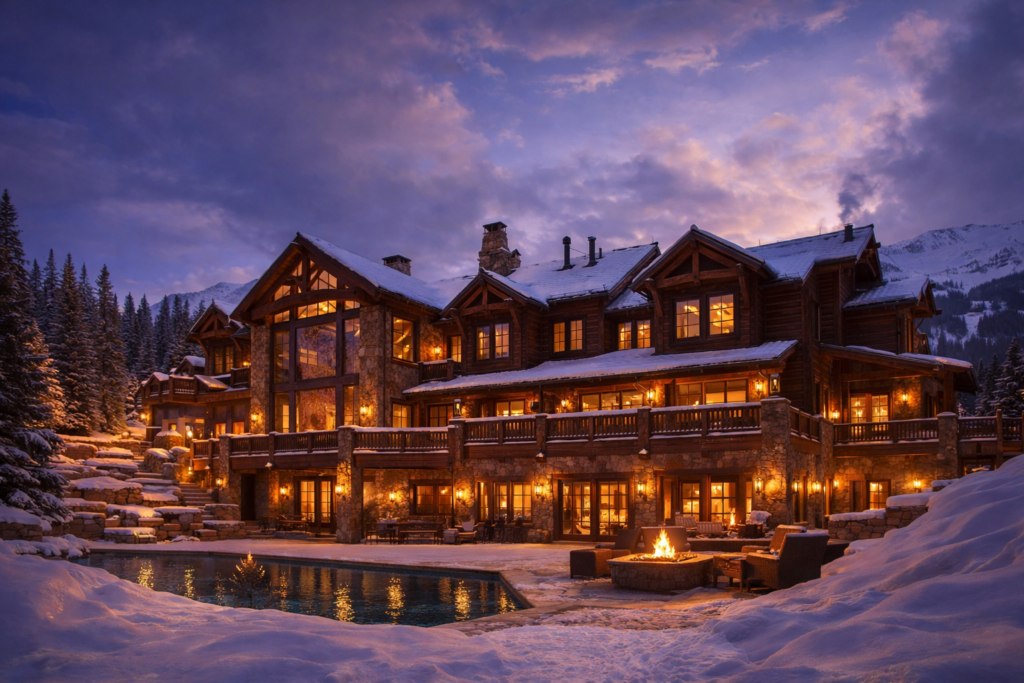
From the Engadin valley to the Rockies, luxury ski real estate is undergoing an architectural and experiential renaissance. With demand shifting away from ostentatious excess toward quietly sophisticated, wellness-oriented escapes, developers are reimagining what it means to own property in the world’s most elite alpine destinations. The fusion of design restraint, ecological intelligence, and location purity is pushing pricing and prestige to new elevations—figuratively and literally.
How the luxury ski real estate market is evolving
Affluent buyers no longer view mountain properties as seasonal indulgences but as adaptable, year-round sanctuaries. According to market observers, properties in top-tier ski destinations are now commanding extended use, driven by flexible remote work models and an emphasis on personal well-being. In Aspen, Courchevel, and St. Moritz, residences are being designed not only for proximity to the slopes but also for privacy, therapeutic amenities, and ecological coherence.
Industry analysts note a growing appetite among UHNW individuals for ski-in/ski-out homes that embrace sustainable construction and unobtrusive elegance. Reclaimed timber, geothermal heating, triple-glazed fenestration, and hyper-local materials are quietly becoming baseline expectations rather than aspirational upgrades. In Zermatt and Whistler, design firms are working with nature—not against it—melding panoramic views with minimalist interiors and smart environmental engineering.
The rise of integrated Alpine living
Ultra-premium ski developments are no longer isolated chalets. Instead, they are component parts of curated alpine enclaves. Mixed-use masterplans are emerging worldwide, from Lech am Arlberg to Park City, embedding private residences within intimate hotel-branded ecosystems, anchored by selective retail, wellness clinics, and fine dining that rarely markets to the masses.
These mountain micro-villages are architected with intention. Ownership often confers access to underground spas, cryotherapy suites, chef-partnered kitchens, and high-touch concierge services designed to anticipate—not react to—resident needs. The convenience narrative is being replaced by an operating model of seamless discretion, tailored to clients who value time and tranquility above all else.
Investment permanence in a climate-aware age
The ethics of investing in high-altitude property have sharpened. With climate volatility and snow reliability under scrutiny, second-home buyers are paying closer attention to ski resort investments that marry long-term viability with climate resilience. Market reports suggest a subtle but present pivot: elevation and exposure now carry as much weight as branding or build quality.
Destinations such as Verbier and Jackson Hole—already prized for consistent vertical drops—are reinforcing their long-term value by investing in lift infrastructure, glacier conservation, and year-round programming. Here, returns are not measured solely in appreciation or rental yield but in the asset’s ability to preserve experience over decades.
Curated scarcity and ultra-local exclusivity
In the rarefied world of luxury ski real estate, scarcity sells—but curated scarcity sells better. Developers now work with local councils to impose architectural restrictions, ensuring that new projects not only harmonize with alpine vernaculars but maintain a tight cap on volume. In locales such as Megève or Val d’Isère, heritage preservation overlays modern innovation, creating a property ecosystem that prioritizes intimacy over expansion.
Off-market sales dominate. Buyer competition is quiet yet intense, with many top-tier homes selling before public release. This trend, paired with foreign ownership restrictions in some Swiss communes, has given rise to exclusive alpine funds and private client networks that handle acquisition as discreetly as wealth structuring.
The future of luxury in the mountains
As the definition of luxury evolves, so too does its material expression in the mountains. Authenticity now rivals extravagance. Buyers seek spaces that support longevity—physically, emotionally, and environmentally. A ski home is no longer simply a place to winter. It’s a nexus of identity, legacy planning, and ultra-private retreat.
While architectural ambition remains visible in headline properties—such as subterranean lodges and cantilevered chalets—most projects whisper rather than shout. The best real estate in the mountains today is not performative. It is purposeful, silent in its opulence, and resolute in its commitment to context.
Look ahead, and it’s clear: luxury ski real estate is no longer about altitude alone. It is about alignment—between values, environment, architecture, and lifestyle. This cohesion is fast becoming the new benchmark for investment-grade alpine living.