The culture of high-end travel is undergoing a considered transformation. In the European Alps, the age of opulent display is yielding to a more nuanced form of prestige. Quiet luxury—elegance without excess—is becoming the hallmark of winter retreats for ultra-high-net-worth travellers. No longer satisfied with hypervisibility, today’s elite seek something simpler, rarer: space, silence, and privacy.
Defining Quiet Luxury
Quiet luxury is less about logos and more about legacy. It is the cashmere coat with no label, the private chalet not listed online, the discreet concierge known only through introduction. In mountain enclaves like Gstaad, Lech, and Courchevel 1850, this unobtrusive sensibility is being embraced by seasoned travellers who prize subtlety over spectacle.
According to travel advisors familiar with this segment, discreet luxury is now commanding premium market attention. Privacy, tailored service, and authenticity are prioritized above brand name recognition. The shift is mirrored in design, where reclaimed wood and natural stone replace Swarovski-studded interiors. The value lies in provenance, not pretense.
Alpine Resorts Leading the Shift
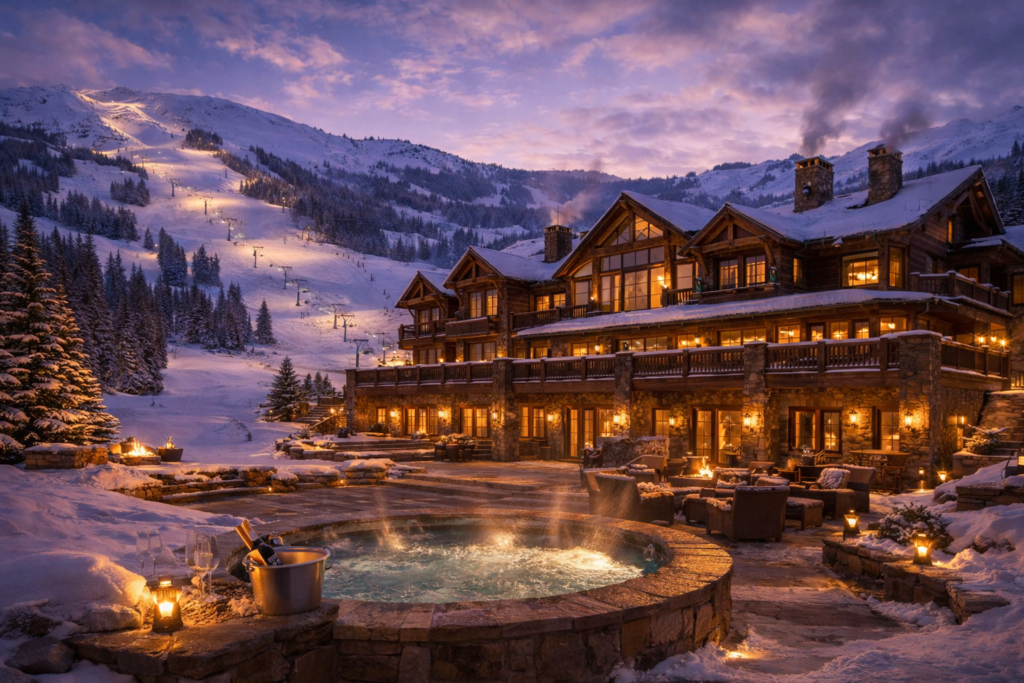
Legacy destinations are evolving to match this refined ethos. In Switzerland, the village of Andermatt—once modest—is now redefining alpine seclusion. The Chedi Andermatt has become synonymous with architectural restraint paired with world-class amenities, appealing to guests seeking serenity over celebrity.
Similarly, Austria’s Arlberg region, particularly Oberlech, maintains limited road access and eschews brash tourism infrastructure. Here, haute comfort takes precedence over scenography. Lech’s classic institutions, such as Hotel Aurelio, focus on discretion and quietly exceptional service.
In France, Courchevel 1850 still maintains its magnetism for the global elite, yet even here, preferences are shifting. Private ski instructors, wellness-centered chalets, and off-hour mountain guides reflect the tone of exclusivity reframed by intimacy. Clients are less interested in being seen and more in feeling restored.
Privacy as the Ultimate Luxury
At altitude, privacy is not incidental—it is engineered. Entire ski-in, ski-out estates are now designed to minimize external interaction. Helicopter transfers, private chefs, and in-villa spa setups exist not merely to impress, but to protect time and sanctuary from interruption.
This is especially true for UHNW families and business leaders seeking true distance from digital noise and social scrutiny. As one European luxury property advisor notes, “The clients we work with want elegance that vanishes into the scenery. They want real silence—the kind you only find above the snow line.”
The Return to Craft, Tradition, and Local Culture
There is a resurgence of heritage appreciation among those curating their seasonal escapes. From hand-loomed alpine textiles to cheese made in centuries-old farms, provenance now equates to prestige. Travelers are choosing destinations not simply because they are famous, but because they are enduring.
In Verbier, local craftspeople are increasingly integrated into luxury experiences—tailored boot fittings, private tours of Swiss ateliers, alpine gastronomy that honors terroir. Luxury is no longer just imported; it is local, lived, and layered with context.
Wellness Reimagined in a High-Altitude Context
Another defining element of quiet luxury in the Alps is the growing sophistication surrounding wellness. Facilities like those at Badrutt’s Palace in St. Moritz or Hotel LeCrans in Crans-Montana offer elevation-adjusted programs that blend sports performance science with healing traditions.
Rather than indulgent spa menus, clients seek discreet but comprehensive wellness ecosystems—oxygen therapy, sleep clinics, altitude-adapted nutrition. These are serious, highly personalized offerings designed not to pamper, but to restore resilience.
A Market Realigned Around Intentional Indulgence
Analysts describe this evolution as part of a broader movement in the global luxury space: purposeful spending, value retention, and tangible returns on experience. Instead of maximalism, we see a pursuit of excellence in essence. Time, craftsmanship, and discretion have supplanted gold as new standards of wealth signaling.
Quiet luxury has also influenced the investment and development strategy in mountain destinations. Boutique properties, limited lots, and private lodge models dominate emerging blueprints. Real estate in regions like Megève and Zermatt is now marketed not on flash, but on heirloom potential.
The Discreet Future of Alpine Travel
As affluent families and global financiers reframe their approach to winter travel, the reassurance of restraint is proving powerful. In today’s hyper-connected landscape, withdrawal—not display—is becoming the final frontier of rarefied living.
The progression toward quiet luxury in the Alps signals more than a seasonal mood. It reflects a deep recalibration in elite tourism—one centered on experience quality, contextual richness, and sustainable distinction.
More than a trend, it is a return to fundamentals: privacy, authenticity, and the understated power of place.