Private aviation in 2025 is undergoing a quiet transformation—one less concerned with brash opulence, and more attuned to bespoke efficiency, discretion, and environmental awareness. As post-pandemic demand stabilizes, the expectations of ultra-high-net-worth individuals (UHNWIs) have recalibrated. For them, time remains the rarest currency, but now it is paired with technological fluency and a new ethical consciousness that is subtly redefining the market.
Demand for Precision, Rather Than Abundance
The era of indiscriminate jet-set indulgence is shifting towards curated, intentional travel. Jet owners and frequent charter clients are increasingly seeking aircraft tailored to specific mission profiles—transcontinental business meetings, family stays in Provence, or alpine retreats—rather than one-size-fits-all grandeur. Industry analysts note that clients now prioritize cabin configuration, noise levels, and cabin pressurization systems over gilded finishes.
This refinement coincides with a generational change in ultra-luxury consumption. Many next-generation owners, inheriting wealth or building it through venture and technology, expect seamless connectivity, sustainable design, and onboard environments that enable both work and rest. Long-range jets like the Bombardier Global 7500 and Gulfstream G800 continue to assert dominance, though efficiency is taking on newfound value.
The Charter Market Redefined
While ownership remains central to the private aviation elite, the global charter landscape has matured. On-demand platforms, once reactive and opaque, have become algorithmically precise and vertically integrated. Jet cards have evolved, with heavier emphasis on guaranteed availability, carbon offsetting, and transparent cancellation terms.
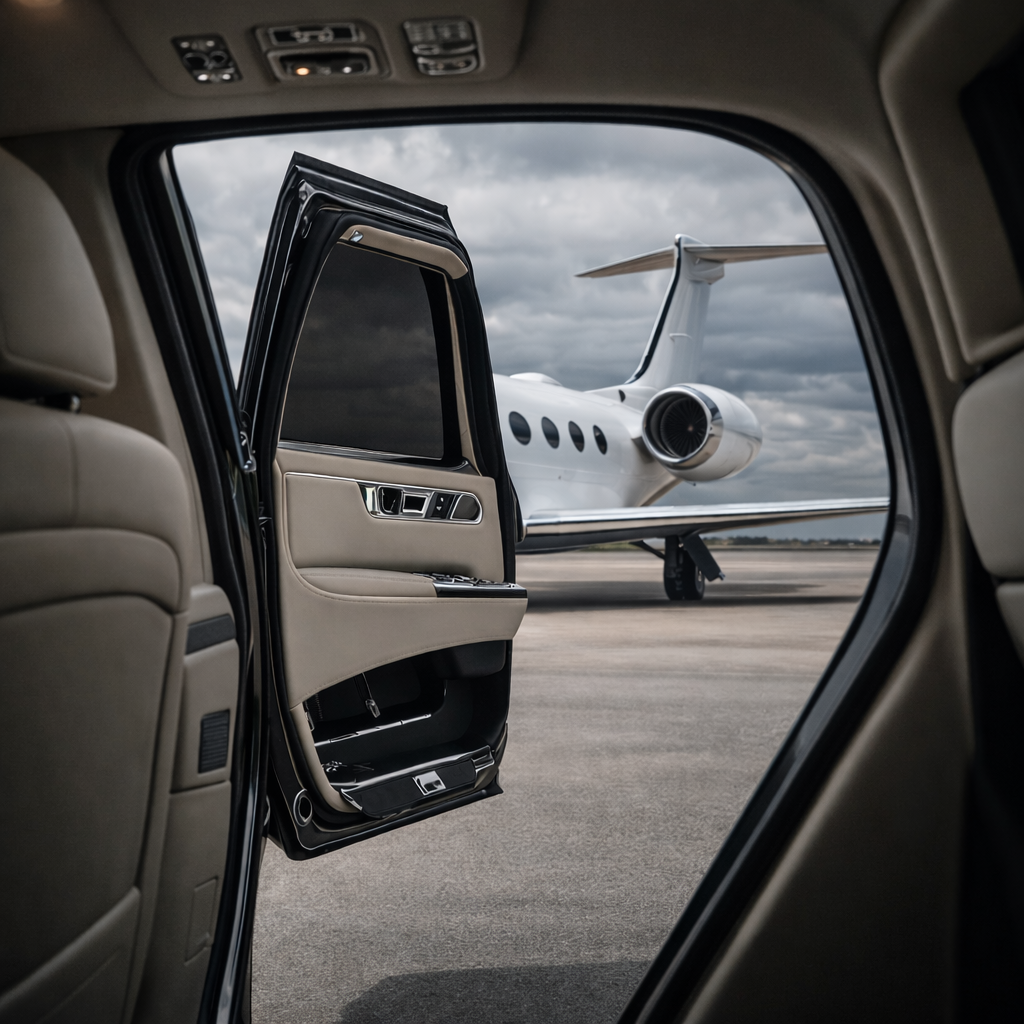
According to market observers, the strongest growth is occurring in the fractional ownership and membership sectors. Providers like Flexjet and NetJets are refining fleet composition to meet a clientele that expects both discretion and consistency. Ultra-personalized concierge services, pre-cleared customs, and aligned ground transport are now standard expectations rather than perks.
Technology Quietly Reshaping the Skies
The technological evolution in private aviation is less about spectacle and more about integration. AI-powered dispatch, predictive maintenance, and end-to-end digital booking platforms are minimising friction in every phase of the journey. For clients, the result is a notably quieter, faster, and more personalised experience—often achieved behind the scenes.
Cabin management systems, once the weak point of otherwise advanced aircraft, have kept pace. High-bandwidth connectivity, biometric access, climate-controlled seating, and unified control interfaces are becoming de facto standards aboard new deliveries. For the modern executive, inflight productivity is no longer an aspiration; it is an expectation.
Sustainability with Subtle Urgency
Among the most pressing shifts in the sector is the drive toward sustainability—though it is rarely discussed in marketing terms. While hybrid-electric propulsion remains in nascent stages, sustainable aviation fuel (SAF) adoption is being encouraged through both private initiative and regulatory frameworks. Aircraft manufacturers including Dassault and Embraer have issued ambitious emissions targets, while operators are increasingly offering SAF as a selectable charter feature.
According to recent reports, SAF availability remains geographically inconsistent, but pressure from climate-conscious clients is exerting tangible influence on infrastructure development. In parallel, some owners are opting for lighter aircraft, more efficient scheduling, and reduced deadheading to offset environmental impact with practical logic.
Interior Design Returns to Its Craft Roots
While minimalism dominates land-based architecture among the wealthy, private jet interiors are trending toward a form of understated craftsmanship. Soft materials, sustainable textiles, and natural finishes are replacing high-gloss veneers and overt branding. Artisanal detail has re-entered cabin design, from hand-stitched leathers to handwoven cashmere throws.
Design houses such as Winch and Lufthansa Technik are collaborating closely with OEMs to deliver interiors that double as flying sanctuaries. Some clients request alpine lodge motifs, while others favor spa-inspired serenity with neutral palettes, quiet lighting, and noise-dampening treatments. The aesthetic, much like the aircraft itself, is no longer for display—it is for inhabitation through journeys of uninterrupted ease.
Ownership Models, Reimagined
The changing economics of ownership reflect these evolving values. Traditional sole ownership is becoming more selective, often held for specific aircraft families or mission frequencies. For many UHNWIs, fractional ownership or customized leasing agreements offer flexibility without the operational complexities—and are often structured to allow tighter control of exposure and capital.
In markets across North America and Europe, aircraft management companies are adopting a more bespoke, client-first philosophy. Multiple ownership models now include tailored asset management, flight-hour fulfilment guarantees, and long-range repositioning. The line between commercial reliability and private indulgence has narrowed, particularly among clients seeking high-frequency usage without fixed bases.
The Global Outlook for Private Aviation in 2025
As the boundaries between business and lifestyle continue to dissolve for the ultrarich, the aircraft remains an irreplaceable asset—a tool of time mastery, global continuity, and personal sovereignty. Yet unlike in previous decades, when extravagance alone defined the space, 2025’s private aviation narrative is subtler, disciplined by purpose and decorated with discretion.
In Europe, where environmental policy exerts more pressure, private aviation routes are becoming increasingly strategic. In the U.S., demand clusters around financial and technology hubs. In the Middle East and Southeast Asia, new infrastructure and inbound wealth are fueling regional hubs, supporting a rebalancing of global jet activity. Across all, the imperative remains constant: make every hour above the clouds count, without compromise, noise, or excess.
The future of private aviation will not be about innovation for its own sake. Instead, it will be about refinement—how to fly cleaner, quieter, smarter, and more intentionally—without losing the inherent privilege of flight. In this domain, silence, speed, and seamlessness have become the ultimate luxuries.